
Breast Cancer Marker CA 15-3
October is Breast Cancer Awareness Month.
Take a moment to learn about the tumor marker CA 15-3, which is used to support the treatment response monitoring in breast cancer patients.
Mucin-1 (from gene MUC1) is a large glycoprotein normally expressed on epithelial cells including those in breast tissue. The glycoprotein forms a protective barrier of mucinous gel on the cell surface.

Mucin-1 is overexpressed in cancer.
Compared to healthy cells, tumour-related mucin-1 has truncated sugar branches and lacks specific positioning on the cell surface.
In breast cancer, extracellular fragments of mucin-1 break off and shed into circulation.
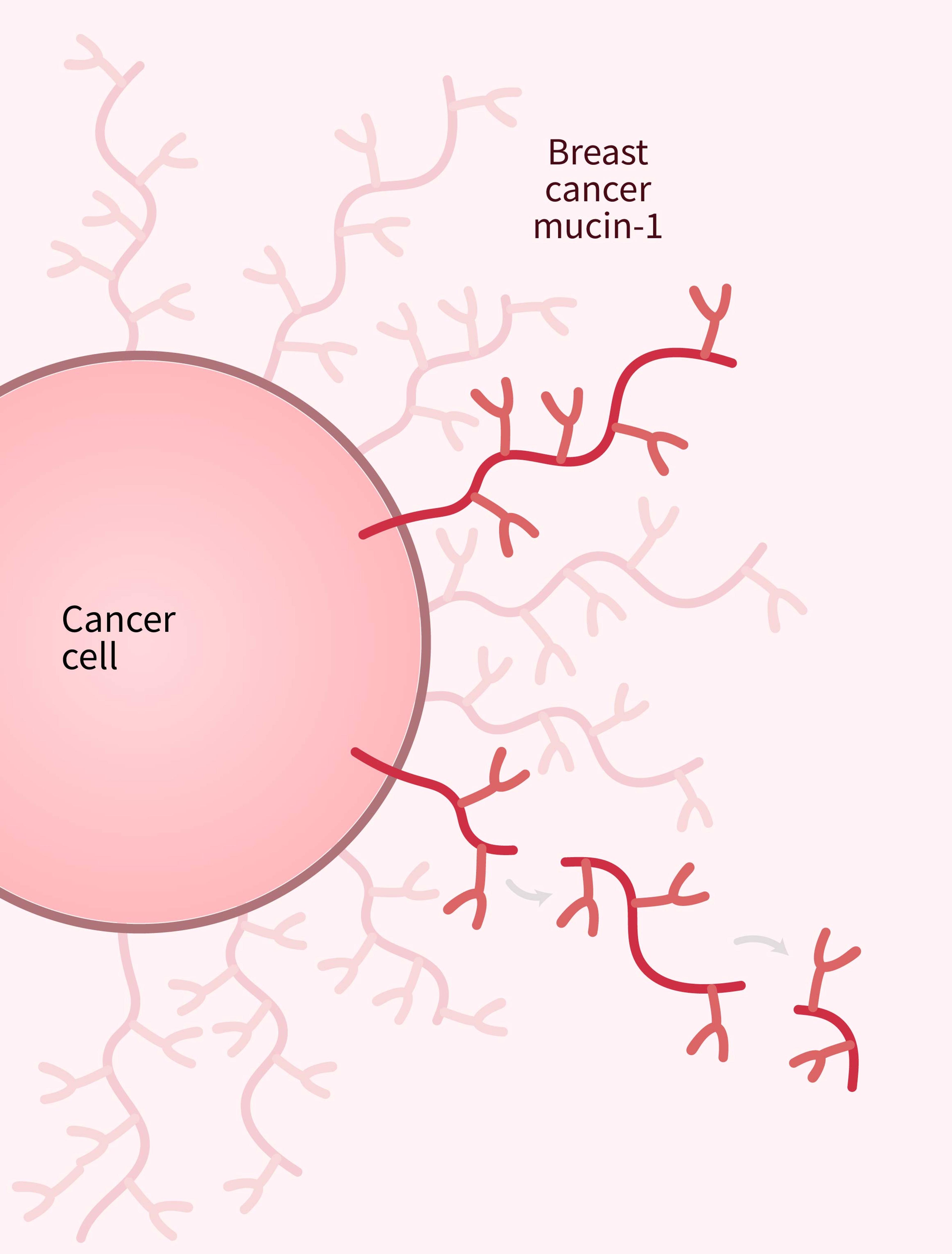
The two monoclonal antibodies 115D8 and DF3 recognise mucin-1-related antigen.
The 115D8 and DF3 antibodies are used in a sandwich immunoassay to detect mucin-1-related antigen in serum.
The serum marker CA 15-3 (Cancer Antigen 15-3) is videly used to support monitoring of breast cancer therapy.

Safe treatment requires reliable data. Quality control is essential for producing reliable test results during treatment response monitoring.

Sources:
Nath S, Mukherjee P. MUC1: a multifaceted oncoprotein with a key role in cancer progression. Trends Mol Med. 2014 Jun;20(6):332-42
Li X, Xu Y, Zhang L. Serum CA153 as biomarker for cancer and noncancer diseases. Prog Mol Biol Transl Sci. 2019;162:265-276