
Breast Cancer Marker CA 15-3
October is Breast Cancer Awareness Month.
Take a moment to learn about the tumor marker CA 15-3, which is used to support the treatment response monitoring in breast cancer patients.
Mucin-1 (from gene MUC1) is a large glycoprotein normally expressed on epithelial cells including those in breast tissue. The glycoprotein forms a protective barrier of mucinous gel on the cell surface.

Mucin-1 is overexpressed in cancer.
Compared to healthy cells, tumour-related mucin-1 has truncated sugar branches and lacks specific positioning on the cell surface.
In breast cancer, extracellular fragments of mucin-1 break off and shed into circulation.
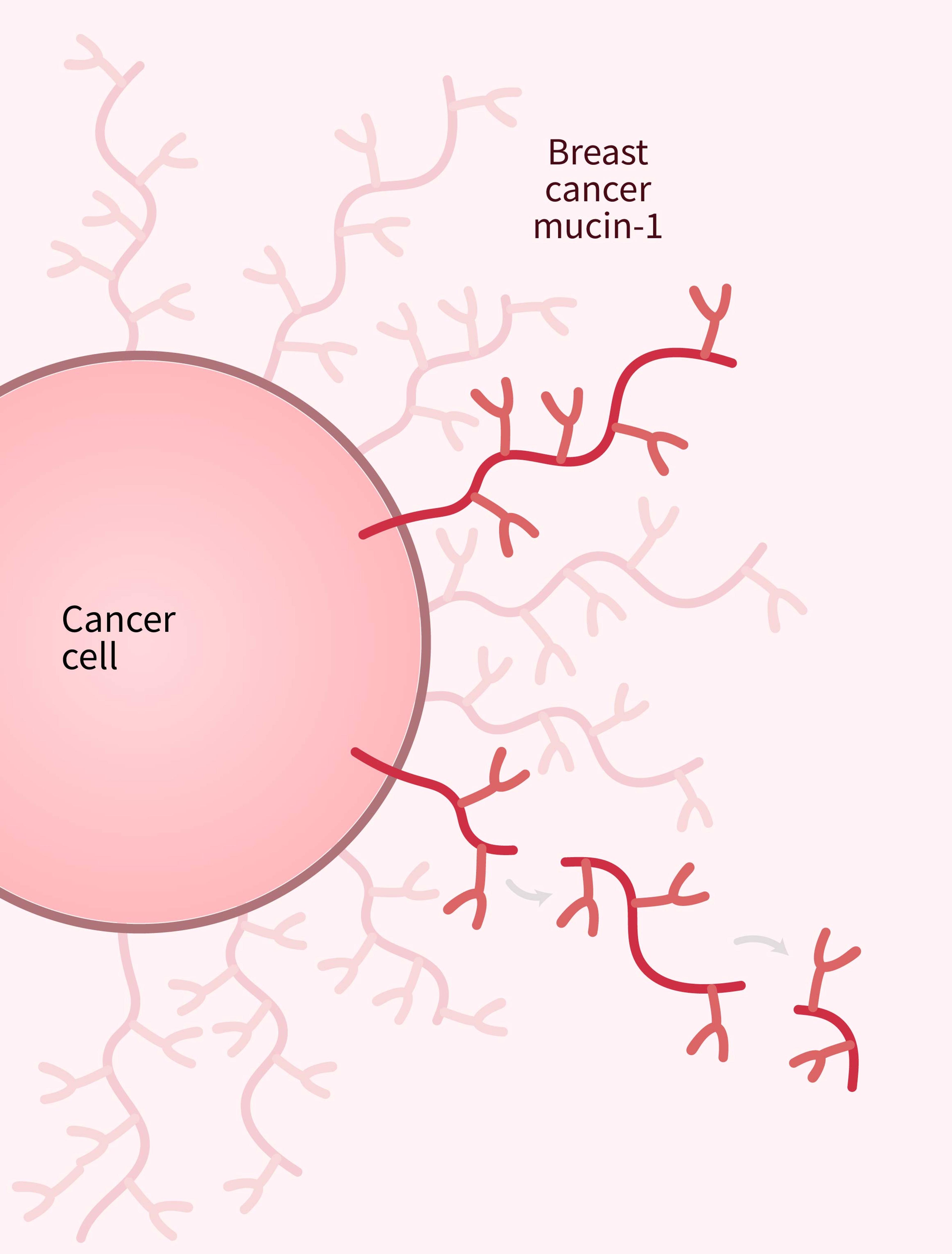
The two monoclonal antibodies 115D8 and DF3 recognise mucin-1-related antigen.
The 115D8 and DF3 antibodies are used in a sandwich immunoassay to detect mucin-1-related antigen in serum.
The serum marker CA 15-3 (Cancer Antigen 15-3) is videly used to support monitoring of breast cancer therapy.

Safe treatment requires reliable data. Quality control is essential for producing reliable test results during treatment response monitoring.

Sources:
Nath S, Mukherjee P. MUC1: a multifaceted oncoprotein with a key role in cancer progression. Trends Mol Med. 2014 Jun;20(6):332-42
Li X, Xu Y, Zhang L. Serum CA153 as biomarker for cancer and noncancer diseases. Prog Mol Biol Transl Sci. 2019;162:265-276
Related articles
𝗛𝗮𝗽𝗽𝘆 𝗜𝗻𝘁𝗲𝗿𝗻𝗮𝘁𝗶𝗼𝗻𝗮𝗹 𝗪𝗼𝗺𝗲𝗻’𝘀 𝗗𝗮𝘆!
Today we celebrate the strength, achievements, and contributions of women around the world. At SERO, we are proud to support women’s health through reliable diagnostic tools that aid in the detection and monitoring of conditions such as breast cancer and PCOS.
